
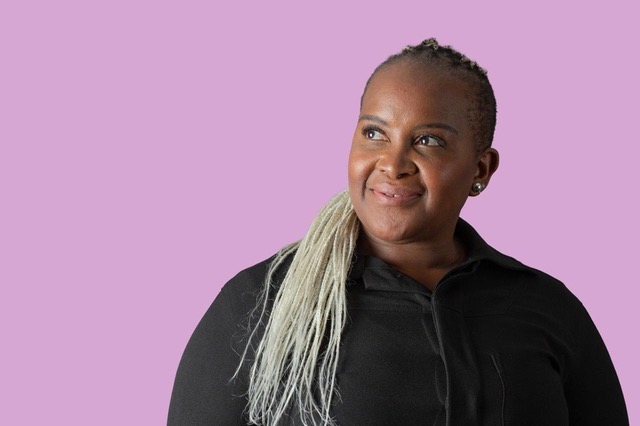
By Carey Finn. The CEO of WPP Media in South Africa and sub-Saharan Africa on merging three agencies into one, rebuilding partnerships and putting AI to work.
Kagiso Musi describes herself as a tinkerer. “I like to break things apart and pull them together,” she says. “We had three different operating models that were lumped into one. I’ve tried to find the best in each of those and simplify how we operate, [in a way] that’s aligned to who WPP is, and where WPP is charting globally, as well as locally. And it’s been fun.” Musi is referring to the 2025 rebranding of Group M to WPP Media that saw EssenceMediacom, Mindshare and Wavemaker brought together under the same unified structure.
👉 Read more: New name, new rules: WPP Media SA takes shape (July 2025)
The three Cs
Musi took the helm of WPP Media in South Africa and sub-Saharan Africa in May this year, after serving as group managing director at Meta Media. She frames the biggest changes she has overseen so far in terms of clarity, comfort, and connectedness. “Our team is no longer working as separate disciplines; they’re working towards a shared ambition,” she says. With the momentum created by these internal shifts, the agency can concentrate on strategy, output, and the entire delivery ecosystem.
Key to the shift was the creation of multidisciplinary “centres of excellence” focused on business growth. Strategists no longer work in isolation, and teams are no longer grouped by discipline. Rather, each client is served by a “client pod” — a small business unit that holds every skill a client needs. “This way of thinking is really about enhancing capabilities across the board: when you’ve got media buyers that can start to think digitally, and apply themselves strategically, it makes for better media people. They are skilled in their discipline, yes, but they are even more capable in their business outlook,” says Musi.
Musi acknowledges that WPP retrenched an unspecified number of staff before she joined, saying: “As with any integration of this scale, we’ve been aligning our structure, capabilities and resources to the new operating model, and continue to do so.”
Future-forward partnerships
“One thing I found when I walked in is that reputationally, WPP wasn’t seen much as a collaborator — at least not with the media-owner community, and I think to some extent even internally,” says Musi. She puts this partially down to the merger: four businesses, counting GroupM, had to become one. “Collaboration wasn’t as natural as it could have been. So [it’s been about] strengthening the way that we collaborate internally and externally.”
Musi’s 25+ years of experience in the industry have taught her that good partnerships lead to great work. “Partnership, for me, is what builds the future of media, because agencies can’t do it alone,” she says. “A connected way of doing things between clients, agencies and media owners is the best way to move forward.”
Within the agency environment itself, collaboration is key to campaign success. Musi believes that WPP Media’s USP is that they are “a network of connected experts with super-intelligent technology”. And when she says experts, she goes beyond the traditional meaning: she talks about access to a diverse array of people, including those “who ordinarily would not be in an agency environment”, like someone with a PhD in the data field.
Global tech, local knowledge
“I’ve seen that our biggest strength is being able to combine world-class global technology with deep local market expertise,” says Musi. “WPP has an incredibly strong tech stack, but that technology means nothing if the (client) brand becomes irrelevant in the market.”
According to Musi, WPP’s global data, connected planning tools and built-in AI system help her team find insights faster and optimise campaigns. “We don’t have technology for the sake of technology,” she says. “The tech stack we have is built around ensuring that the work we do can be enhanced, so that we can solve clients’ problems. I’ve said this to my team a lot: I’m focused on us being recognised as real growth partners for our clients.”
On the AI front, Musi notes that local adoption is slower than global markets, so the agency has been “pushing hard” on training. “We’ve embraced it in planning, we’ve embraced it in audience discovery, insight generation and performance management, and we’re leveraging agents to automate, particularly with repetitive tasks,” says Musi. “Once we’re able to embed it strongly, our teams can do the work they should be there for – the thinking on creativity, the thinking on client growth; that’s the goal.”
The more things change…
“Operating with connected capabilities, rather than siloed and fragmented services, has always been the bedrock of WPP – even back in Martin Sorrell’s days – and it’s even more important today,” says Musi. “Clients no longer want separate conversations between creative, media, data, commerce, and so on; they expect integrated systems.”
She is quick to note that the concept is not revolutionary; it’s more of a return. “The reality of what we’re talking about is not new: agencies started like that, it was connected capabilities – or at least it was capabilities that sat under the same roof,” Musi says. “We’ve come full circle – we’ve gone back to where we were. We need to come together because we need to have these connected capabilities in order to be able to work on a brand and do well for them. Isn’t it crazy how technology has leaped us forward, to take us back to where we started?”
Carey Finn is acontributing writer toMarkLives MEDIA andMarkLives.com.


