
By Herman Manson. For Josh Dovey, CEO of Omnicom Media Group South Africa, the success of the Omnicom–IPG integration will be measured by whether clients see tangible benefits and employees feel they have a future in the combined business.
“To make clients believe that this merger has merit for them, and it’s not just cost cutting for Wall Street,” he says of his priorities for the next 12 months. That means winning new business and keeping key talent, while making employees feel part of one organisation.
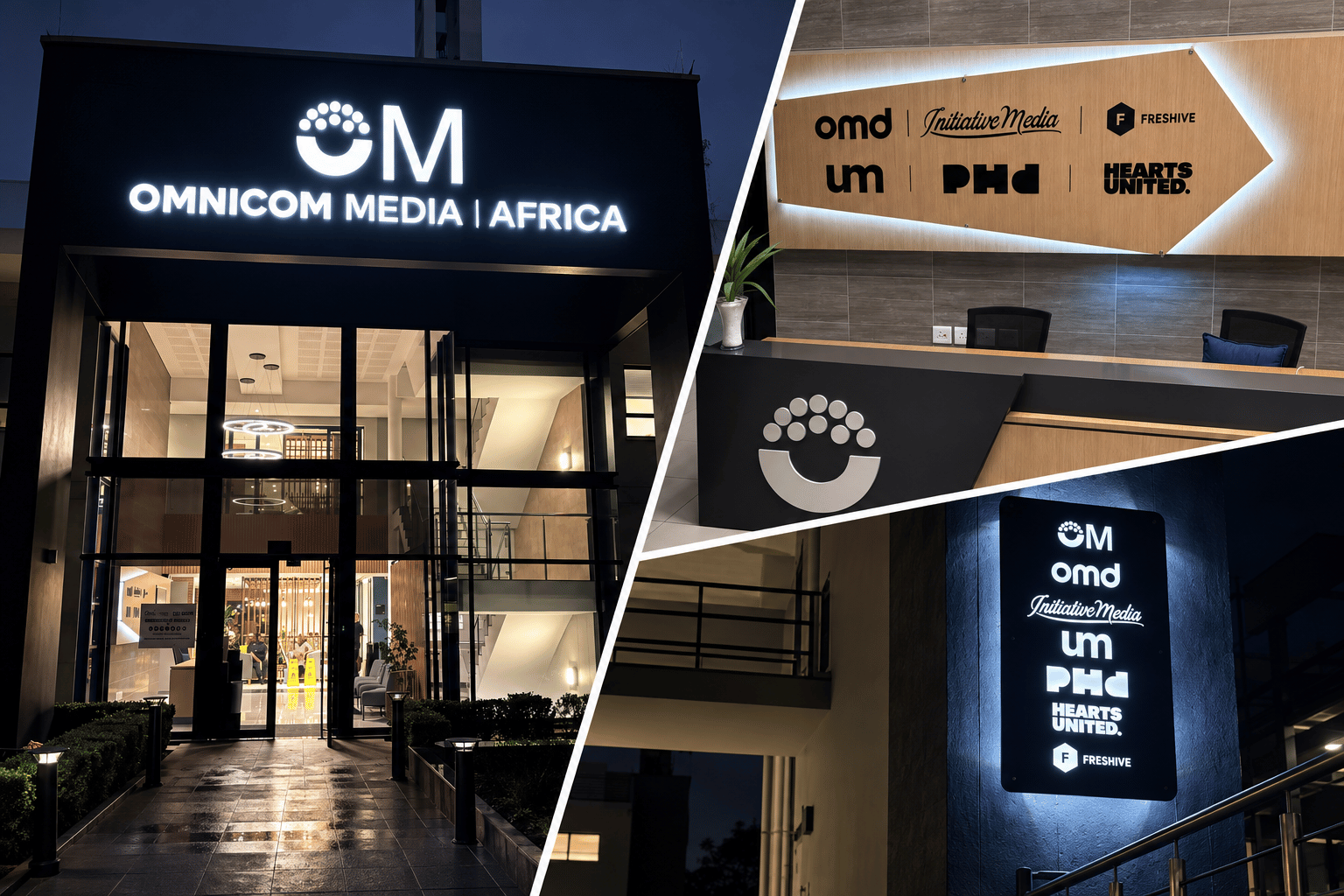
To get there, the group is folding its local media operations into a single company, Omnicom Media Group South Africa, with shared IT, financial reporting and media buying, while retaining the agency brands that clients know.
“That will be one company, one set of audits, one IT department, you know, one centralized buying facility,” says Dovey.
One company, five agency brands
The integration follows Omnicom’s acquisition of Interpublic Group (IPG), announced in November 2024. For the South African media businesses, however, the process has taken time to move from uncertainty to implementation.
Dovey describes a lengthy period during which local teams were unable to say much about what the combination would mean. They got the green light to start implementing the new structure around December 2025.
The local picture was complicated by IPG’s structure, which involved Nahana, The MediaShop and IPG’s media business as separate entities.
The MediaShop is not part of the integration: Dovey describes it as an independent business owned by Nahana. Although it used IPG data and research in the past, he says it was never part of the planned integration.
The new group keeps Initiative and UM from the former IPG media business, alongside Omnicom’s OMD and PHD. Hearts & Science has become Hearts United.
“Those are the client facing brands,” says Dovey.
The brands will no longer operate as separate companies. Instead, they will sit within Omnicom Media South Africa, with internal profit-and-loss reporting maintained by brand. The aim is to eliminate duplicated functions while preserving the identities through which clients engage with the business.
Former IPG Media executives, including Brad Smale and his finance team, retain leadership positions. Existing client relationships are part of the continuity the group wants to maintain.
Combining data and capabilities
Data and research are central to the integration. The former IPG operation had access to Acxiom, which Dovey calls the gold standard for data, while Omnicom had its implementation platform, Omni. Rather than developing capabilities independently, the combined business can draw on both.
“We can feed their fantastic data into our fantastic implementation platform and we can, you know, do things better and faster,” he says.
Dovey sees better data and AI as opportunities to improve media planning and buying. He expects stronger commercial terms with media owners, more accurate targeting, improved consumer insights and faster turnaround times.
These benefits will take time to realise. Dovey describes integration as a journey rather than a switch that can simply be turned on. He also sees scope for agency remuneration to evolve towards performance-based models linked to fixed key performance indicators, supported by AI. “Clients do well, we’ll do well,” he says.
Choice, relationships and people
Retaining the agency brands is a way of preserving client choice. Dovey argues that it would make little sense to tell a client that Initiative no longer exists after that client chose to work with the brand.
Clients can work with an individual agency brand or consider the broader operation, depending on their needs and potential conflicts.
“It’s all about people at the end of the day, isn’t it? Who do you want on your business? Who’s your account director? Who’s your planner? Do you like working with them? Who are they? Gotta have a face to [deal with].”
Dovey says there has been no headcount rationalisation in South Africa as part of the integration. The teams are now operating under one roof in new offices, and current headcount remains unaffected.
He expects efficiencies to come from the back office and duplicated functions rather than removing people who generate revenue and service clients. Future staffing levels will depend on the business the group wins or loses.
Scale and local autonomy
Dovey says the combined group accounts for 36% of the South African media market, citing RECMA. The group has between 220 and 240 employees, across Johannesburg, Cape Town and Durban.
Its largest clients include Diageo, Old Mutual, McDonald’s, Volkswagen and Checkers. The scale creates opportunities, but the integration also has implications for how the South African operation works within the wider group.
Dovey says local decision-making remains intact and that the business has gained greater autonomy within South Africa and the sub-Saharan market.
When asked what remains unchanged in terms of local decision-making, Dovey says, “everything”. “If anything we, we now have been given greater autonomy within South Africa and, and the Sub Saharan market.”
Omnicom Media Group has an owned operation in Nigeria and affiliate relationships in about a dozen sub-Saharan African markets, coordinated from Johannesburg.
Dovey says the hardest part of the integration was the time it took and the challenge of managing expectations on both sides. Teams were uncertain about what the eventual structure would look like, while clients wanted to know what the merger would deliver beyond the status quo.
It got easier once the teams could speak openly, work together and find a shared vision. For Dovey, the outcome is not simply a larger media group, but a South African operation with access to greater resources and more freedom to respond to its markets.
“We’re completely in charge of our own destiny,” he says. The aim, he adds, is to free people to operate in their markets as they see fit, “better and faster”.
Herman Manson is the founding editor of MarkLives and MarkLives MEDIA.


