
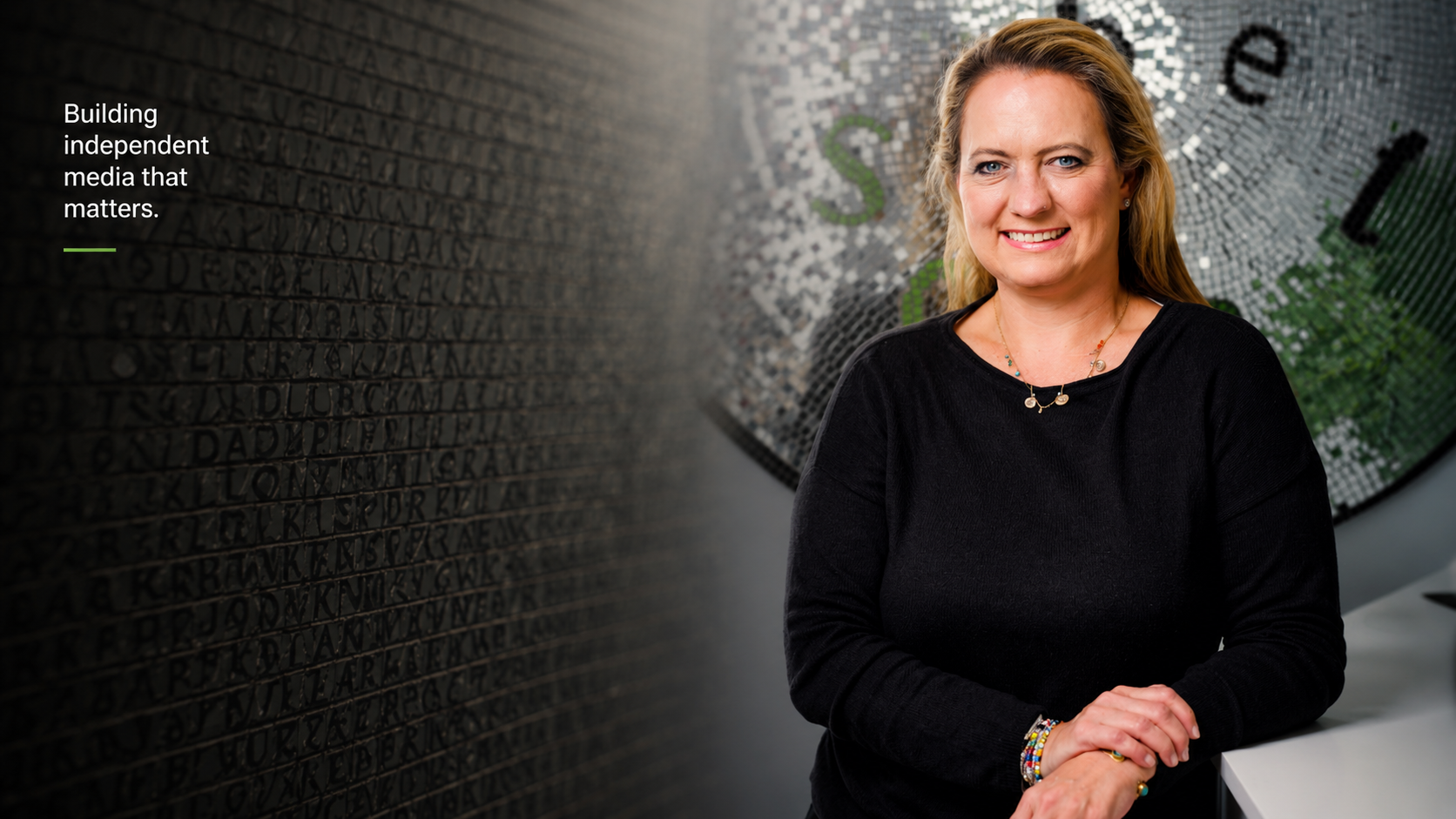
By Cary Finn. Nikki Lewin (above), MD of Alphabet Soup, on what it takes to run a successful indy media outfit in the midst of major industry consolidation.
Full-service media agency Alphabet Soup has been in business since 2000, delivering on everything from strategy and planning to buying and market analysis, promotions and sponsorships over the decades.
Key clients currently include the Gordon Institute of South Africa (GIBS), Mahindra, Atlas Finance, SAICA, Weelee, Cliffe Dekker Hofmeyr Attorneys, Specpharm and BDO, with billings of between R80mil. and R120mil. and BB-BEE Level 4 status. The agency has won more than 20 awards in the last 25 years, including the Most Awards Specialist Agency (several times).
Nikki Lewin, managing director, shares a few things she has learned along the way, as well as what keeps Alphabet Soup, and its core team of around 10 people, competitive today.
MarkLives MEDIA [MLM]: What does it mean to be a media independent today?
Nikki Lewin [NL]: What independence means in practice is that our clients come first.
At its core, a media independent is a planning and buying agency that is not owned by a global holding company. This allows us to make decisions based solely on what is right for our clients’ businesses, rather than being influenced by commercial agreements, preferred supplier arrangements, or network-driven objectives.
Being independent has allowed us to work with some phenomenal South African brands, including numerous start-ups. Over the years, we have had the privilege of partnering with businesses from their early stages and watching them grow into established brands, often beginning with relatively modest media budgets.
Today, independence is increasingly defined by decision-making autonomy, transparency, flexibility, and accountability. Our clients expect strategic partners who understand not only media, but also the broader commercial realities of their businesses. Whether working with a CMO, CEO, or business owner, our role is to ensure media investment is aligned to business objectives and supports growth at every stage of the marketing funnel.
MLM: How has the industry evolved over the course of your career?
NL: When I started in the industry, media planning was relatively straightforward. Television, radio, newspapers and magazines dominated, audiences were easier to find, and media plans were built around a far smaller number of channels and platforms.
The role of digital advertising has been one of the most significant changes during my career, starting with the rise of the internet, followed by mobile and what many refer to as the fourth screen, and now most recently the emergence of AI.
AI is undoubtedly a tool that agencies need to understand and incorporate into their offering. But there are growing debates around whether people are starting to rely too heavily on AI bots for answers, rather than developing genuine expertise including local relevance and gut feel. The professional battle in the future will be between those with deep knowledge and those who rely on automated shortcuts. The human connection and storytelling will be important for those brands that want to develop authenticity and real connections with their customers.
Looking at other changes, with the growth of programmatic across digital environments including outdoor, this now requires a different skill set to traditional planning and doesn’t always deliver the right environment. PR has moved into content production and the role of influencers advocating for brands over the past few years has been significant.
The television landscape has changed just as dramatically. During the early years of my career there were only a handful of commercial channels available to advertisers. Today, there are more than 150 commercial channels catering to highly diverse audiences. We have also seen significant consolidation within the industry, including the recent Canal+ acquisition of MultiChoice.
MLM: Given the local and global industry consolidation, is there still a sustainable lane for independents?
NL: Absolutely. I believe there is a very sustainable future for independent agencies in South Africa. Entrepreneurship remains a vital part of our economy, with thousands of new businesses launching every year. Many of these businesses may not have the budgets required to attract the attention of large network agencies, but they still need strategic thinking, strong media partnerships and agencies that are invested in helping them grow.
At the same time, economic growth remains under pressure, and marketers are being asked to do more with less. As a result, every rand spent on media is under greater scrutiny than ever before. Making a smaller budget work hard and deliver meaningful impact is a skill in itself, and it is an area where many independent agencies have built their reputations.
While consolidation will continue across the industry, I do not believe scale alone is the answer. Clients are looking for senior involvement, faster decision-making, accountability and agencies that genuinely understand their businesses. Independent agencies are often able to offer a level of accessibility and responsiveness that can be difficult to achieve within larger structures and changing teams.
Many independents are also led by highly experienced industry professionals with deep institutional knowledge and strong relationships across the media landscape. That combination of experience, agility and client focus will continue to create a meaningful role for independent agencies over the next five years and beyond.
MLM: What does your agency offer that a network or holding-company shop can’t or won’t?
NL: The biggest difference is not what we do, but how and why we do it.
Independent agencies and network agencies often have access to many of the same media channels, technologies and talent. What differentiates us is our ability to make decisions entirely through the lens of our clients’ business objectives, without the constraints of global ownership structures, network mandates or proprietary commercial agendas.
If I had to summarise what an independent agency offers, it would come down to a few key things:
- Unconflicted decision-making focused on what is right for the client.
- Greater agility and faster decision-making.
- Direct access to senior leadership and experienced strategists.
- Tailored solutions built around South African market realities.
- Greater transparency and accountability.
- An entrepreneurial mindset that is invested in client success.
This is not to suggest that network agencies do not bring value. They offer scale, international expertise and significant investment in technology and research. The difference is one of operating models.
MLM: If you could give marketers one piece of advice about how to get more out of their relationship with their media agency, what would it be?
NL: My advice to clients would be to treat your agency as a business partner rather than simply a supplier.
One of the biggest changes I have seen over the years is that marketing teams are becoming younger, often with less exposure to the full media and production process. Elements such as detailed briefs, campaign timings, production lead times, approvals and creative rollout can have a significant impact on the success of a campaign, yet these nuances are often given little consideration in the broader picture of deliverables.
The strongest agency-client relationships are built on communication, collaboration and mutual respect. Good work happens when both parties are aligned on the objectives, the timelines, the budget and the desired outcomes. It should never feel like an “us versus them” relationship, but rather a true partnership where both companies grow and celebrate the successes of achievement.
I would also encourage marketers to involve their agencies as early as possible in the planning process. The earlier an agency understands the business challenge, the more value it can add strategically, rather than simply being asked to execute a predetermined plan.
Finally, while procurement plays an important role in any business, it is important that commercial discussions do not overshadow the strategic objectives of the partnership. The most successful relationships are those where all parties have a clear understanding of expectations, costs, timelines, payment terms and responsibilities from the outset.
MLM: Independent agencies are often described as a different kind of place to work. How does being independent shape your culture?
NL: As a smaller agency, everyone is involved. There are fewer layers, greater collaboration and a strong sense of accountability because people can see the direct impact of their work on clients and the business.
We have found real value in being together as a team. Some of the best ideas come from conversations across desks, learning from colleagues and solving challenges collectively. It creates an environment where people are exposed to different aspects of the business rather than working in very defined silos.
I do think independent agencies attract a particular type of media professional. They tend to be curious, entrepreneurial and willing to take ownership. They enjoy being close to clients, being involved in decision-making and having the opportunity to make a meaningful contribution from an early stage in their careers.
MLM: Access to proprietary data and tech stacks has become a major differentiator. How are independents keeping pace?
NL: Data and technology have become incredibly important, but I think the conversation often focuses too heavily on who owns the technology rather than how effectively it is used.
Independent agencies have access to many of the same research tools, technology platforms and data sources as larger network agencies. The real differentiator is not the tool itself, but the ability to interpret the information and turn it into meaningful recommendations for clients.
AI can analyse vast amounts of data, identify patterns and improve efficiency, but there are still elements of marketing and consumer behaviour that require human insight. Understanding cultural nuances, reading shifts in consumer sentiment, recognising opportunities within a market and applying experience and judgement are things that technology alone cannot fully replicate.
We have always believed that technology should support decision-making rather than drive it. The value we bring is understanding the client, understanding the consumer and applying the right data and technology to solve a business challenge.
Carey Finn is a contributing writer to MarkLives MEDIA and MarkLives.com.


